

Zelle scammers bilk bank customers out of thousands — how to avoid them [updated]
Zelle scammers bilk bank customers out of thousands — how to avoid them [updated]
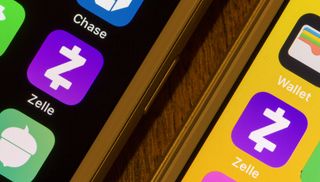
Ii Chicago-area women say scammers bilked them out of $3,500 each by conning them over the phone and then using the Zelle mobile-payment system to withdraw money from their Bank of America accounts.
"It's really distressing," i of the women, Nausheen Brooks, told TV station WLS. "You relieve your hard-earned money to just be taken abroad from you."
- How to freeze your credit and avoid identity theft
- This Windows exploit can hijack your PC, and in that location's no ready yet — what to do
- Plus: WhatsApp to offer 'cease-to-terminate' encrypted backups — what to know
The scammers texted Brooks and the other woman, Darlene Chelsey, pretending to exist Banking concern of America and asking them to verify purchases. Both women denied making the purchases in question, and so were called by persons claiming to exist banking concern representatives. The scammers used what appeared to exist legitimate Bank of America phone numbers.
The women were each told that there had been Zelle withdrawals from their accounts, only that the issues could quickly be fixed if they used their own mobile banking apps to transfer the money back to themselves.
Brooks and Chelsey both did so, and the money disappeared. It seems that both their Zelle accounts had already been taken over past the scammers.
"They definitely had access to the business relationship if the money was wired to herself," Bogdan Bodezatu, a threat researcher with Bitdefender, told WLS. He added that the scammers may have gotten admission to the accounts due to data breaches at other websites, which tin compromise reused passwords.
How to avoid Zelle scams
Fugitive Zelle scams is like fugitive many other online scams. Create potent, unique passwords for any business relationship that involves money, especially banking accounts, and apply one of the best password managers to keep all of them straight.
Don't trust anyone who calls or texts you and wants you to perform a fiscal transaction, even if that person appears to exist from your bank. Instead, call the bank yourself using a number that you look up.
Don't give out one-fourth dimension-use verification codes to anyone, even if they claim to exist from your bank. And again, never reuse passwords for sensitive accounts.
Years of Zelle scams
Sadly, this is not a new occurrence. Zelle-based scams accept been happening for years — we kickoff wrote most them in April 2018.
The primeval scams involved crooks getting people to pay for not-existent items through Zelle, and then discovering they couldn't get their money back because unlike with a credit-card, the money is withdrawn immediately from your bank business relationship.
Later, people who'd never fifty-fifty signed up for Zelle were scammed out of thousands of dollars by crooks who set up accounts in their names and tuckered their banking company accounts.
That's because Zelle is owned by 7 of the largest U.S. banks, including Bank of America, and used past hundreds more banks. Anyone who has an account with those banks is eligible for a Zelle account, and many banks build Zelle right into their own mobile apps.
These about contempo scams seem to involve persons whose accounts have already been hijacked, perhaps through password reuse. (If you lot utilise a countersign on more than i business relationship, and so a compromise of whatever one of those accounts compromises them all.)
Why Zelle is vulnerable
The real problem is that Zelle uses email addresses and telephone numbers to identify account holders, and neither was e'er designed to exist foolproof. Both email addresses and phone numbers can be easily "spoofed" past cheap software.
Many banks do text a one-fourth dimension lawmaking to customers to verify certain transactions, nevertheless not only can text letters be intercepted, but scammers can con customers into revealing texted codes.
Another issue is that Zelle has direct access to banking company accounts. Venmo, which is not affiliated with the banks, makes users create a separate account that is linked to a credit card or into which the users deposit money. This creates a buffer between Venmo transactions and their banking company accounts.
We've reached out to Zelle to inquire if the company has made whatsoever security improvements in the past three years, and whether Zelle would consider setting up a "staging" account to human action equally a buffer, like to the way Venmo operates. We'll update this story when we receive a response.
In the meantime, one affair does announced to accept changed: Both Brooks and Chelsey had their $3,500 losses covered by Banking company of America. That's a amend event than some of the earliest Zelle scam stories, in which the victims were substantially told past the banks that they should accept read the fine print.
That fine print, by the mode, still says that the banking concern isn't legally liable if you transfer money via Zelle to the wrong people.
Update: Zelle responds
In response to our inquiries, Zelle provided this argument.
"Phishing Scam: This is an example of a phishing scam where the scammer spoofed the Bank of America phone number and attempted to convince the individual to provide their personal information, not a alienation of Bank of America or Zelle security.
Nosotros'd like to remind consumers that your bank will never call you to ask for sensitive data and they would not ask a client to transfer funds between accounts in club to prevent fraud. Hang upwardly and call your bank at the phone number listed on the back of your bank-issued debit card or on the banking company'south official website if you must provide information over the phone.
In-App Notifications: When consumers ship money using Zelle within their mobile or online banking feel, they are sending money directly from their bank business relationship to another person'south depository financial institution business relationship, typically within minutes when both users are already enrolled.
When sending money in that location is a final prompt requiring the sender to confirm the mobile number or email accost being used and that it belongs to the intended recipient. This prompt provides the first proper noun of the person who the mobile number or email is enrolled to and an warning that the payment cannot be cancelled one time sent.
Consumer educational activity: Zelle is working to address an acute need for financial education. Through our Pay It Safe initiatives, we have partnered with organizations to offer free fiscal education to consumers through modern banking courses and consumer protection resource.
Through a strategic partnership with EVERFI — the leading social impact pedagogy applied science company — we have reached more than 60k students in 47 states. Results testify that high school students achieved a 39% average cognition gain after taking the Zelle Money Moves: Modern Cyberbanking & Identity Protection course.
In addition, we are working with Cybercrime Support Network to spread awareness and brainwash consumers and small businesses on avoiding financial fraud and scams."
- Read side by side: Buying a PS5 or Xbox Series X probably won't go easier earlier 2023
- Check out our IdentityForce UltraSecure+Credit review

Source: https://www.tomsguide.com/news/more-zelle-bank-scams
Posted by: myersforetump.blogspot.com
0 Response to "Zelle scammers bilk bank customers out of thousands — how to avoid them [updated]"
Post a Comment